
Why do people talk in their sleep?
How common it is, what sets it off, and when it is worth a closer look.
Sleep talking, called somniloquy, is common and usually harmless. The Sleep Foundation reports that about two thirds of people talk in their sleep at some point in their lives, and around one in six has done so in the past three months. It happens in every stage of sleep, is more frequent in children, and in most people is an occasional mumble, a few clear words or a short, half-sensible sentence.
This page explains what is known about why it happens, what can set it off and when it is worth a closer look. It is general information, not medical advice.
What sleep talking is
Sleep talking is any speech or sound made while asleep, from a murmur to whole sentences, sometimes in a different tone of voice than when awake. The person does not remember it in the morning. Episodes are usually brief, often less than 30 seconds, and may happen once or several times a night.
Sleep scientists classify it as a parasomnia, a group of unusual behaviours during sleep that also includes sleepwalking and night terrors. On its own, sleep talking is the mildest of these.
Why it happens
The exact cause is not well understood. Speech needs parts of the brain that are partly switched off during sleep; when sleep is lighter or disrupted, some of that activity breaks through as words. Things that make sleep more fragmented seem to make sleep talk more likely:
- Stress and anxiety.
- Not enough sleep, or an irregular sleep schedule.
- Fever and illness.
- Alcohol before bed.
- Other sleep disorders, such as sleep apnea, sleepwalking or night terrors, which can appear alongside it.
- Family history: it tends to run in families.
Does what people say mean anything?
Usually not in any reliable way. Recorded sleep talk is often fragments, single words, laughter or mumbling. Some of it sounds like one side of a conversation. There is no evidence that sleep talk reveals secrets, tells the truth or predicts anything; it is best treated as noise from a sleeping brain, sometimes funny, rarely meaningful.
How to find out if you talk in your sleep
You will not know unless someone hears you, or you record yourself:
- Put your phone on the nightstand, plugged in, microphone toward you, and record the whole night with Voice Memos.
- Load the recording into the free sleep recording analyzer, which finds the moments louder than the room so you do not have to listen to the whole night.
- Play the moments marked as several uneven bursts; that pattern is typical of speech.
Our sleep talking recorder page goes through recording settings in more detail.
Can you reduce it?
There is no specific treatment for ordinary sleep talking, and most people do not need one. Things that support steady sleep may help:
- Keep regular sleep and wake times, and get enough sleep.
- Avoid alcohol and heavy meals late in the evening.
- Wind down before bed to lower stress.
- If a partner is bothered, earplugs or a sound machine on their side can help more than anything you do.
When to talk to a doctor
See a doctor or sleep specialist if:
- sleep talking starts suddenly as an adult, especially after the age of about 25;
- it comes with screaming, fear, or violent movements such as kicking or hitting;
- you or your partner notice pauses in breathing, gasping or choking;
- you feel very sleepy during the day;
- it disturbs your sleep or a partner’s sleep a lot.
A doctor may suggest a sleep study to check for related conditions.
Nocturne records it for you
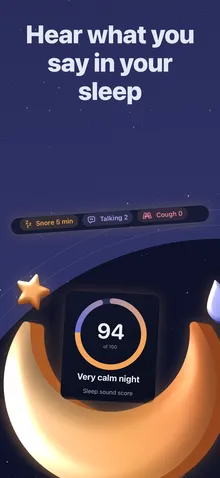
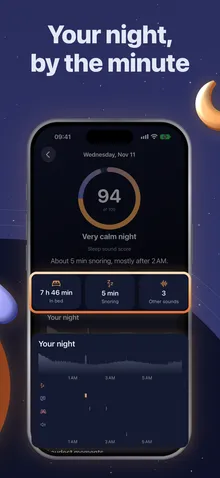
Nocturne for iPhone listens from the nightstand and keeps a short clip of each moment it hears, sorting snoring, sleep talk and coughs with a sound classifier. It turns sleep talk into text on the iPhone itself, so in the morning you can read what you said without listening to the whole night. Nothing is uploaded. Nocturne reports sounds, not health; it is not a medical device.
Every night, without scrubbing
Nocturne listens from the nightstand and keeps a clip of each moment.
- Listens for
- Snoring, sleep talk, coughs, loud noise
- Keeps
- A short clip around each moment
- Sleep talk
- Turned into text on your iPhone
- Each morning
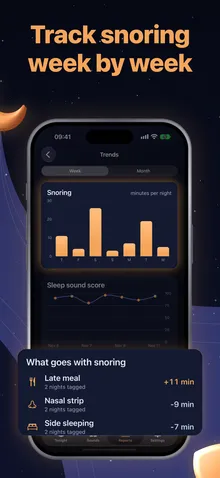
- A score, a timeline by the minute, the moments
- Without Pro
- Every night recorded, the latest report, its three loudest clips
- Stays
- On your iPhone. No account, nothing uploaded

Before you record
Is talking in your sleep normal?
Yes. The Sleep Foundation reports that about two in three people talk in their sleep at some point in their lives. It is more common in children and usually harmless.
Do people tell the truth when they talk in their sleep?
There is no evidence that sleep talk reveals secrets or the truth. It is often fragments, mumbling or words that make no sense, and it is not a reliable account of anything.
What triggers sleep talking?
The exact cause is not well understood. Commonly mentioned triggers include stress, too little sleep, fever, alcohol and other sleep disorders.
Can you stop talking in your sleep?
There is no specific treatment for ordinary sleep talking. Regular sleep, enough of it, less alcohol before bed and lower stress may reduce it. If another sleep problem is involved, treating that can help.
When should I see a doctor about sleep talking?
If it starts suddenly in adulthood, comes with screaming, fear or violent movements, disturbs your sleep or your partner's a lot, or you feel very sleepy during the day.
More on snoring and sleep talk
- Do I snore? Check last nightPick a night recording and hear every loud moment. Nothing is uploaded.
- Snoring or sleep talking?Both wake the room at 3 a.m. On a recording they sound nothing alike.
- Sleep talking recorderTwo ways to hear what you say at night, both on your iPhone.
- How loud is snoring?What the decibel figures mean, and how to measure your own snoring at home.
- When your partner's snoring keeps you awakeFixes for the snorer, fixes for you, and how to talk about it without a fight.
- Recording a whole night with Voice MemosSettings to check before bed, so the memo is still running in the morning.
- Coughing at night: record it, then count itA few nights of recording tell a doctor more than "I cough a lot at night".
- How to stop snoring: find out what works for youChange one thing at a time, record the nights, and let the recordings decide.
- Snoring or sleep apnea?What to listen for on a recording, and what only a sleep study can tell you.
- How to tell if you snore, using your iPhoneapps.cihat.dev