
Snoring or sleep apnea?
What to listen for on a recording, and what only a sleep study can tell you.
Most snoring is just snoring. Sleep apnea is when breathing repeatedly stops or becomes very shallow during sleep, and the sign you can hear is a pattern: snoring, a sudden silence, then a gasp or snort when breathing restarts. If a recording or a partner picks up that pattern, or you are very sleepy during the day, see a doctor. Only a sleep study can say whether it is apnea; a recording helps you describe what happens.
This page is general information, not medical advice.
What the difference is
Snoring is the sound of air passing through a narrowed, relaxed airway, making the soft tissue vibrate. Many people snore at least now and then, and on its own it is usually harmless, if annoying.
Obstructive sleep apnea is when the airway closes partly or fully, again and again, during sleep. In the clinical definition an apnea is a pause in breathing of at least 10 seconds. The body then wakes briefly, often without the person remembering, to open the airway. That can happen many times an hour, which is why people with apnea can sleep all night and still feel exhausted.
Snoring is common in obstructive sleep apnea, but the two are not the same thing. Plenty of loud snorers do not have apnea, and some people with apnea snore little.
What to listen for on a recording
If you record a night, these are the sounds that are worth showing a doctor:
- Snoring that stops abruptly in the middle of a run, rather than fading out.
- A silence of 10 seconds or more while the person is clearly asleep.
- A gasp, snort or choking sound at the end of that silence, often louder than the snoring around it.
- The same pattern repeating through the night, sometimes every minute or two.
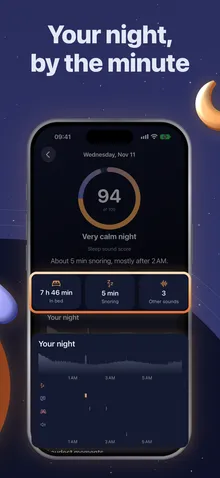
On the timeline of the free sleep recording analyzer, snoring shows up as long runs of breath-paced moments. Look for runs that break off, a gap, and then one loud moment before the runs start again. Play those moments and listen. The analyzer does not detect apnea, and a gap can just as well be someone turning over and breathing quietly, but it helps you find the places worth hearing.
To record the night in the first place, see recording a whole night with Voice Memos.
Signs that are not sounds
A recording only catches part of the picture. Other signs often linked to sleep apnea include:
- Strong sleepiness during the day, such as nodding off while reading, in meetings or, most seriously, while driving.
- Morning headaches or a dry mouth on waking.
- Waking up unrefreshed after what should be a full night.
- Trouble concentrating, irritability or low mood.
- Waking at night to use the bathroom more often than usual.
- High blood pressure.
If you notice several of these, mention them to a doctor even if nobody has heard you stop breathing.
What a recording can and cannot do
| A night recording can | A night recording cannot |
|---|---|
| Show when snoring happens and how long the runs are | Measure oxygen levels or breathing effort |
| Catch silences and gasps for you to play to a doctor | Tell an apnea from quiet breathing for certain |
| Compare nights after a change such as side sleeping | Count apneas per hour or grade severity |
| Help a partner show what they hear | Replace a sleep study |
How sleep apnea is diagnosed
A doctor will usually ask about symptoms and may use a questionnaire, then arrange a sleep study. That can be a night in a sleep lab (polysomnography) or a home sleep apnea test, a small device you wear at home that measures airflow, breathing effort and blood oxygen. Treatment depends on the result and the cause, and ranges from position changes and mouthpieces to a CPAP machine.
Getting help sooner
Do not wait for weeks of recordings if:
- someone has seen you stop breathing and gasp repeatedly;
- you are sleepy while driving;
- a child snores loudly most nights or stops breathing in their sleep.
Recording your nights
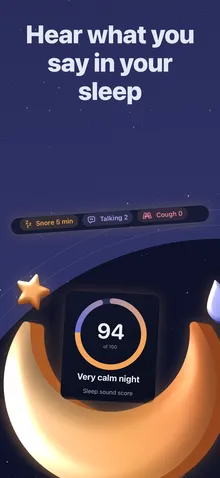
Nocturne for iPhone records from the nightstand, tells snoring from sleep talk, coughs and other loud noises with an on-device sound classifier, and keeps a short clip around each moment, so you have something to play to a doctor. It reports sounds, not health. Nocturne is not a medical device and does not detect, diagnose or treat sleep apnea. If you are worried about your breathing at night, see a doctor. For snoring without those warning signs, how to stop snoring explains how to test what helps.
Every night, without scrubbing
Nocturne listens from the nightstand and keeps a clip of each moment.
- Listens for
- Snoring, sleep talk, coughs, loud noise
- Keeps
- A short clip around each moment
- Sleep talk
- Turned into text on your iPhone
- Each morning
- A score, a timeline by the minute, the moments
- Without Pro
- Every night recorded, the latest report, its three loudest clips
- Stays
- On your iPhone. No account, nothing uploaded

Before you record
How do I know if my snoring is sleep apnea?
You cannot know for sure without a sleep study. Signs that point towards apnea are pauses in breathing, followed by a gasp or snort, strong daytime sleepiness, morning headaches and waking up unrefreshed. If you notice them, see a doctor.
What does sleep apnea sound like?
Often a pattern of snoring that suddenly stops, a silence while the person keeps trying to breathe, and then a loud gasp, snort or choke before the snoring starts again. Not everyone with sleep apnea sounds like this.
Can you have sleep apnea without snoring?
Yes. Snoring is common in obstructive sleep apnea, but some people with apnea snore little, and central sleep apnea may involve no snoring at all.
Can a phone app detect sleep apnea?
A recording app can capture sounds such as snoring, silences and gasps, which can help you describe your nights to a doctor. It cannot measure breathing effort or oxygen levels, so it cannot diagnose sleep apnea.
How is sleep apnea diagnosed?
With a sleep study. That can be a night in a sleep lab or a home sleep apnea test that a doctor prescribes, which measures breathing, airflow and blood oxygen while you sleep.
More on snoring and sleep talk
- Do I snore? Check last nightPick a night recording and hear every loud moment. Nothing is uploaded.
- Snoring or sleep talking?Both wake the room at 3 a.m. On a recording they sound nothing alike.
- Sleep talking recorderTwo ways to hear what you say at night, both on your iPhone.
- Why do people talk in their sleep?How common it is, what sets it off, and when it is worth a closer look.
- How loud is snoring?What the decibel figures mean, and how to measure your own snoring at home.
- When your partner's snoring keeps you awakeFixes for the snorer, fixes for you, and how to talk about it without a fight.
- Recording a whole night with Voice MemosSettings to check before bed, so the memo is still running in the morning.
- Coughing at night: record it, then count itA few nights of recording tell a doctor more than "I cough a lot at night".
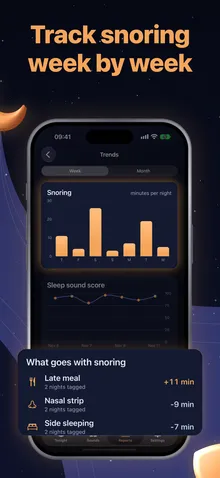
- How to stop snoring: find out what works for youChange one thing at a time, record the nights, and let the recordings decide.
- How to tell if you snore, using your iPhoneapps.cihat.dev